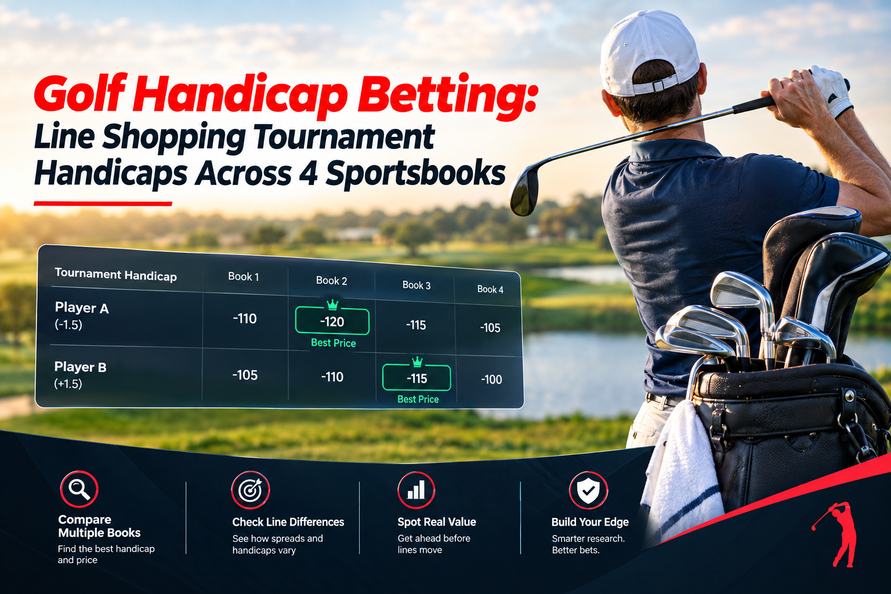
The exact same handicap line does not look the same at every single sportsbook, and most bettors never bother checking twice before locking in a number. Golf handicap betting rewards exactly that kind of small extra effort, since virtual strokes get priced slightly differently depending on which book you're actually looking at.
Here's how to shop these lines properly instead of settling for whatever pops up first.
What Golf Handicap Betting Actually Means
Golf handicap betting odds work by adding or subtracting virtual strokes to level the playing field between an outright favorite and a longer shot. A full shot or half shot handicap changes a matchup completely, turning a lopsided outright price into something closer to a genuine coin flip on paper.
Full Shot Versus Half Shot Makes a Real Difference
The gap between a full shot and half shot handicap sounds small until you actually watch how often it swings a final settled result. That half-stroke difference is exactly where line shopping starts paying off.
Golf Tournament Handicap Markets Worth Comparing
Golf tournament handicap markets exist across a full 72-hole event or scaled down to a single-round handicap, and pricing between the two isn't always consistent from book to book. A 72-hole handicap line at one sportsbook might offer meaningfully better value than the identical matchup priced at another.
Golf Spread Betting Explained Simply
Golf spread betting essentially borrows structure from other sports, giving an underdog a stroke cushion against a heavy favorite. This opens up outright odds mismatches into genuinely competitive, bettable propositions that a straight moneyline market simply wouldn't offer.
Why Spreads Attract Sharper, More Careful Bettors
Bettors drawn to spread markets tend to study matchups more closely than casual outright bettors, since the whole appeal is finding a mismatch the book undervalued when setting the handicap number in the first place.
Golf Handicap Lines Vary More Than People Expect
Golf handicap lines shift based on each individual sportsbook's own model and betting volume, which is exactly why comparing multiple boards before wagering matters so much here specifically. A line freeze at one book while another book has already adjusted creates a genuine, exploitable value gap.
Odds Comparison as a Habit, Not a One-Time Check
Odds comparison across at least three or four books should become routine before placing anything meaningful. Best available price isn't always at the sportsbook you happen to have open by default, and a green highlight showing the top number across boards can mean the difference between a losing bet and a winning one.
Building a Genuine Bankroll Edge Over Time
A small, consistent bankroll edge from always grabbing the best available price compounds significantly over a full season of betting, even if any single line shopping win feels minor in isolation.
Spotting Market Discrepancy Before It Disappears
Market discrepancy between books doesn't last forever, since sharp money eventually pushes lines back into alignment. Catching that gap early, before it closes, is really the entire value proposition behind line shopping in the first place.
Building a Simple Line Shopping Checklist
A genuinely useful checklist before placing any handicap bet includes checking at least three sportsbooks, noting whether the handicap itself differs or only the associated price moves, and confirming how each book handles a tie once virtual strokes get applied to the final settled score. That last detail trips up more bettors than it should, since dead heat rules for handicap markets aren't always identical to standard outright tie policies.
Building this habit into a quick two-minute routine before every handicap wager pays off steadily over a full season, even though any single instance of finding a better number might feel like a small, almost trivial win in isolation.
Handicap Betting Pairs Well with Matchup Research
Combining handicap analysis with the same matchup research used for straight head-to-head bets often reveals opportunities neither approach would surface alone. A player who looks like a fair coin flip on a straight moneyline basis might represent clear value once a half-stroke handicap gets applied in their favor, especially if recent course fit data supports that lean already.
Making Line Shopping a Real Habit
Comparing outright odds across boards is already common practice for most bettors. Extending that same habit specifically to handicap and spread markets is where a lot of untapped value quietly sits.
Pinshot compares handicap pricing across major sportsbooks side by side so you can spot the best available number before locking anything in.
Ready to find the best number on the board? Compare handicap lines across sportsbooks in one place. Must be 21 or older to play. If things feel out of hand, call 1-800-GAMBLER.